
Technical Advantages of Hydraulic Cone Crusher: A Material Science Perspective
In the field of industrial comminution, the transition from traditional mechanical spring-loaded systems to advanced hydraulic cone crushers represents a major leap forward in fracture mechanics and process control. Analyzing this from a material science and kinematic perspective reveals that modern hydraulic configurations do more than just improve mechanical reliability—they fundamentally change how energy is transferred to the material bed. By optimizing energy distribution and controlling the stress state within the crushing chamber, these machines achieve high reduction ratios and excellent product cubicity.
1. Thermodynamics of Real-Time Hydraulic Pressure Regulation
The primary advantage of hydraulic cone crushers, including both multi-cylinder and single-cylinder designs, is their ability to maintain constant, dynamic control over the system’s internal pressure. Traditional spring crushers rely on mechanical deflection limits, but hydraulic systems use advanced thermodynamic and fluid power principles to protect the machine’s components during operation.
When uncrushable material, such as tramp iron, enters the crushing cavity, it causes an immediate, massive spike in localized pressure. In a multi-cylinder hydraulic system, this pressure wave travels through the hydraulic circuit, triggering the accumulator system. The gas-charged accumulators compress instantly, allowing the hydraulic cylinders to stroke downward. This rapid movement expands the Closed Side Setting (CSS) and lets the tramp material pass through safely without stalling the motor or cracking the main frame.
Once the uncrushable object is cleared, the hydraulic reclamation system automatically restores the pre-set pressure. This returns the mantle to its exact operating position within milliseconds, ensuring consistent performance. If the machine stalls under a heavy load, the dual-function hydraulic system can lift the bowl or lower the shaft to clear the cavity safely. This eliminates the dangerous, time-consuming manual labor required to clear older, spring-loaded crushers.
2. Kinematic Coordination and the Laminated Crushing Effect
Beyond mechanical safety, the main advantage of advanced hydraulic cone crushers lies in their precise kinematic design. High eccentric speeds, combined with optimized stroke geometries, change how rocks break inside the chamber. Instead of relying solely on single-particle impact or compression against the liners, these crushers utilize high-density laminated crushing (also known as inter-particle comminution).
This process relies on precise timing and synchronization. The high eccentric speed applies rapid, rhythmic impacts to the material bed as it moves down through the chamber. This rapid compression forces rocks to crush against each other, distributing multi-directional tensile stresses through the material layer. This creates several key advantages:
- Preferential Fracture Along Grain Boundaries: Micro-fractures form along natural internal flaws and grain boundaries, significantly reducing the energy needed to break the rock.
- Excellent Cubical Shape: Inter-particle friction grinds down flaky, elongated edges, producing a highly sought-after cubical finished product.
- Reduced Liner Wear: Because the material is crushing against itself, there is less direct abrasive contact with the manganese steel liners, extending the wear life of the parts.
3. Comparative Matrix: Multi-Cylinder vs. Single-Cylinder Dynamics
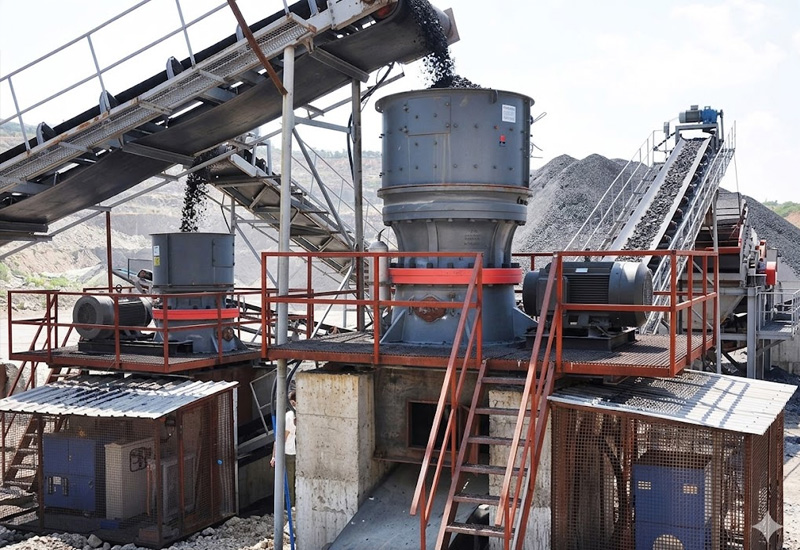
Industrial operations choose between multi-cylinder designs (which use a fixed main shaft and an eccentric bushing) and single-cylinder designs (where the main shaft moves vertically supported by a single hydraulic piston). Both systems offer distinct engineering advantages depending on the application:
| Mechanical Parameters | Multi-Cylinder Architecture (e.g., HPT300) | Single-Cylinder Architecture (e.g., HST250) |
|---|---|---|
| Structural Design | Fixed main shaft with a rotating eccentric sleeve; multiple perimeter cylinders handle tramp release and adjustment. | Moving main shaft supported by a single bottom hydraulic cylinder that controls both CSS adjustments and tramp release. |
| Crushing Force Distribution | High structural stiffness allows the machine to handle high crushing forces near the top of the chamber, making it ideal for extremely hard rock. | Optimized kinematics ensure consistent material flow and efficient performance throughout the entire length of the cavity. |
| Operational Advantages | Produces a high percentage of fine material and excellent cubical product shapes due to strong inter-particle compression. | Features a simple mechanical layout with fewer moving parts, making it easy to automate and adjust via remote CSS control. |
4. Field Performance Data and Technical Analysis
To verify these mechanical principles, we can look at data from high-capacity industrial applications. The technical parameters of flagship hydraulic units demonstrate how motor power, chamber design, and kinematic speed work together to maximize production capacity.
HPT300 Multi-Cylinder Hydraulic Cone Crusher:
Designed for challenging applications requiring high reduction ratios and excellent product shapes. It features a maximum feed size of 220 mm, an operating power rating of 220 kW, and a processing capacity ranging from 110 to 440 metric tons per hour, depending on the chamber configuration and CSS setting.
For applications focused on high throughput and simplified automation, single-cylinder systems offer clear operational advantages:
HST250 Single-Cylinder Hydraulic Cone Crusher:
Driven by a 250 kW motor, this system combines a specialized crushing cavity with precise stroke adjustments. It provides high operational efficiency, low maintenance overhead, and reliable performance when processing abrasive materials.
By using real-time hydraulic pressure regulation alongside optimized stroke kinematics, modern processing plants can maintain consistent peak performance. These advanced systems eliminate the downtime common with older equipment designs, allowing operations to achieve high reduction ratios, superior product shapes, and reliable mechanical safety.
Frequently Asked Questions
- What is the difference between single-cylinder and multi-cylinder hydraulic cone crushers?
- Multi-cylinder crushers feature a fixed main shaft where multiple external cylinders adjust the setting and provide tramp protection. This design delivers high crushing forces, making it ideal for hard rock and fine material production. Single-cylinder crushers use a moving main shaft supported by a single hydraulic cylinder at the bottom, offering a simpler design that is easy to automate and maintain.
- How does laminated crushing improve product shape?
- Laminated crushing occurs when material is compressed in dense layers rather than as individual rocks. This high-density compression forces the rocks to crush against each other. This inter-particle friction breaks down flat, elongated edges, creating a more consistent and cubical finished product.
- How does a hydraulic cone crusher handle uncrushable material like tramp iron?
- When uncrushable material enters the chamber, the resulting pressure spike forces hydraulic fluid out of the support cylinders and into gas-charged accumulators. This allows the crushing mantle to drop instantly, widening the setting so the object can pass through safely. The system then automatically pumps fluid back into the cylinders, returning the machine to its precise operating position without stopping production.