
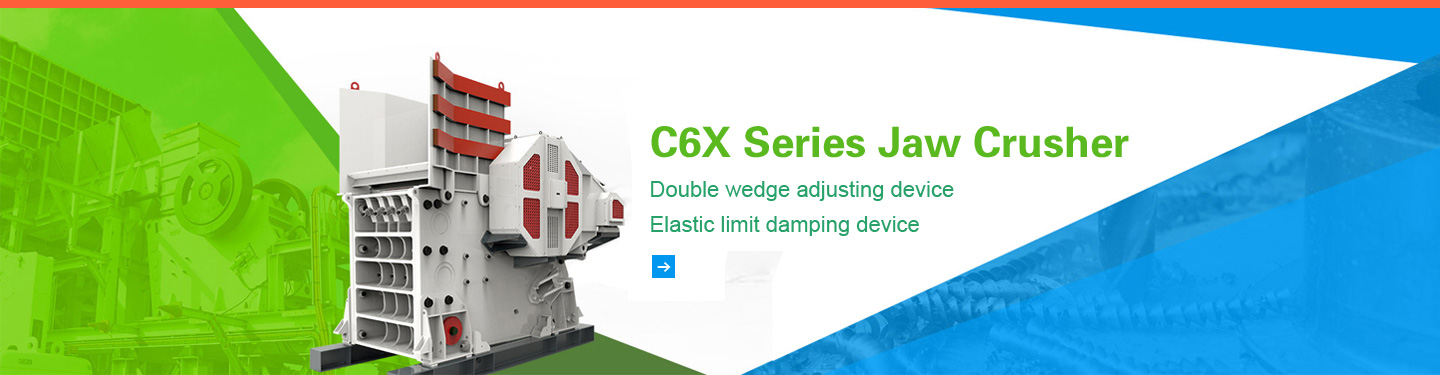
In mineral processing, crushers play a crucial role in reducing the size of raw materials for easier handling and subsequent processing. The choice of crusher depends on the feed size, desired product size, and the hardness of the ore. Crushers can be broadly classified based on their crushing mechanisms and particle size reduction capabilities. Below is an analysis of different-sized crushers commonly used in mineral processing.
1. Primary Crushers
Primary crushers handle the largest feed sizes, often directly from blasting or excavation. Their purpose is to reduce run-of-mine (ROM) ore into smaller fragments suitable for secondary crushing or grinding.
- Jaw Crushers: Known for their simple design and robustness, they can process hard and abrasive ores. Feed sizes may exceed 1,000 mm, with outputs typically ranging between 100–350 mm.
- Gyratory Crushers: Suitable for large-scale mining, gyratories handle higher capacities than jaw crushers. They can accept similar feed sizes but provide more continuous crushing, reducing ore to 150–250 mm.
Key Advantage: Large reduction ratio at high throughput rates.
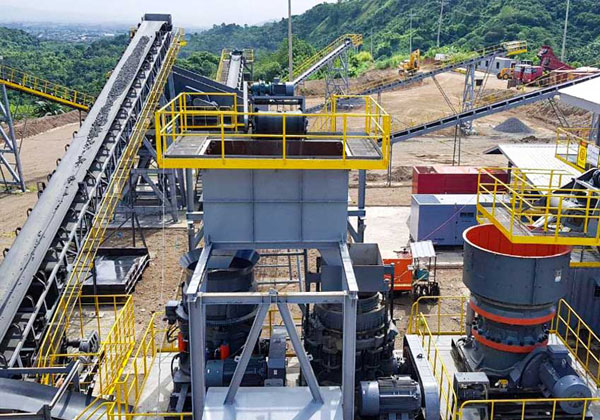
2. Secondary Crushers
Secondary crushing reduces material from primary crushers to finer sizes, typically between 25–100 mm.
- Cone Crushers: Widely used for medium to hard ores, they produce uniform particle sizes. Cone crushers are versatile, offering adjustable settings for different size reductions.
- Impact Crushers: Ideal for softer, less abrasive ores and aggregates. They operate with high reduction ratios but can suffer from wear when processing hard ores.
Key Advantage: Control over product size distribution, critical for grinding circuits.
3. Tertiary and Fine Crushers
These are used where very fine material is needed for direct use or further grinding. Output sizes may fall below 10 mm.
- Vertical Shaft Impact (VSI) Crushers: Produce high-quality, cubical sand-sized particles, making them suitable for aggregate production and some ore preparation.
- High-Pressure Grinding Rolls (HPGRs): Though technically not crushers in the traditional sense, HPGRs are increasingly used to achieve fine particle sizes with lower energy consumption compared to conventional crushing.
Key Advantage: Generation of fine particles with controlled energy use.
4. Selection Considerations
Choosing the appropriate crusher size and type depends on several factors:
- Ore Characteristics: Hardness, abrasiveness, and moisture directly influence wear and efficiency.
- Capacity Requirements: Larger crushers are needed for high-tonnage operations, while smaller crushers suit pilot plants or selective mining.
- Product Specification: Desired particle size distribution and shape determine whether impact, cone, or VSI crushers are appropriate.
- Energy Efficiency: With rising energy costs, equipment like HPGRs and modern cone crushers are favored for their lower specific energy consumption.
In mineral processing, crushers of different sizes work in sequence to progressively reduce ore for downstream processing. Primary crushers handle large ROM material, secondary crushers refine intermediate sizes, and tertiary crushers generate fine products. A well-designed crushing circuit balances capacity, energy consumption, and product quality, ensuring efficiency throughout the mineral processing chain.