
Based on recent site audits in abrasive river stone circuits, the biggest threat to your profitability timeline isn’t the upfront equipment price, but the hidden wear caused by round, high-silica feeds. The high-frequency metallic screech of round silica slipping against a manganese mantle is the sound of your operational margin evaporating. Smooth, hard river gravel resists standard compression. It slides. It gouges. It destroys poor chamber profiles. Optimizing this process requires treating the crushing cavity as a high-pressure dynamic environment where material hardness directly dictates mechanical stroke.
Defeating Compressive Strength and High Silica Abrasiveness
Relying on standard crushing mechanics for river stone guarantees catastrophic liner failure and unacceptable expenditure per shift.
River stone typically presents a high Abrasiveness Index and extreme Compressive Strength. The material’s Mohs hardness directly attacks the eccentric shafts and mantle profiles of generic crushers. When feed moisture spikes, you can feel the heavy, irregular vibration through your steel-toed boots as the wet fines turn into a sticky industrial paste, bridging the feed hopper and altering the crushing work index. You must weaponize the material against itself. Multi-chamber selection in your secondary crushing stage is non-negotiable. A precisely tuned high-capacity secondary cone crusher forces the round stones to fracture under immense volumetric pressure rather than simple surface impact.
Inter-Particle Crushing Mechanics in HPT Cone Crushers
Hydraulic adjustment of the eccentric speed is the only scientifically valid method to match the cavity to the specific fineness modulus of your feed.
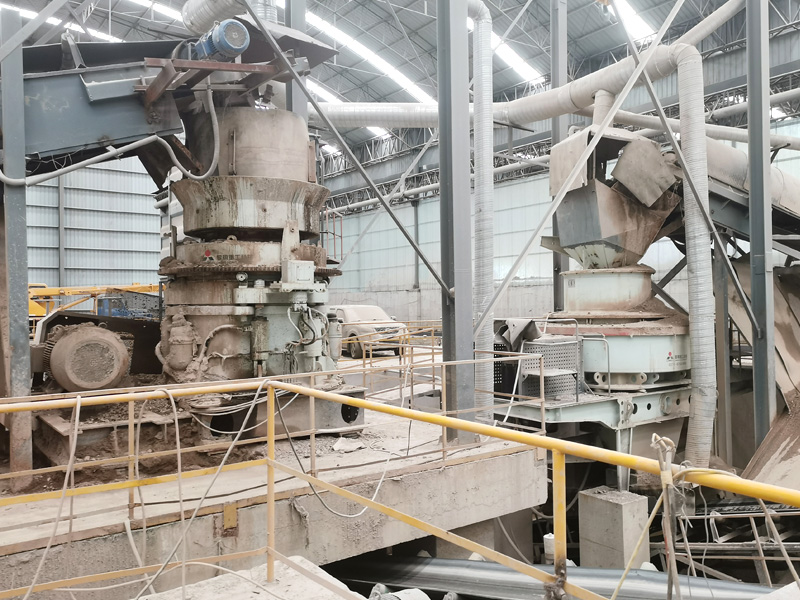
To optimize how to optimize river stone crushing efficiency, you must master “Inter-particle Crushing.” The HPT series cone crusher is built explicitly for this. By keeping the chamber choke-fed, the kinetic energy from the 250 kilowatts motor transfers directly into the rock mass. The river stones crush each other. This preserves the hydraulic cylinders and toggle plates from absorbing the full reactive force of 200MPa silica. The physics don’t care about your production schedule. If you run a low eccentric speed on hard river rock, the stroke will fail to generate sufficient inter-particle density, resulting in flakiness and high recirculation loads. Adjust the hydraulic settings dynamically based on real-time gradation analysis to secure capital payback velocity.
Configuration Matrix: Aligning HPT and VSI6X Stages
Mismatched maximum feed sizes between secondary and tertiary stages create severe bottlenecks, spiking power draw and destroying your production-to-cost ratio.
To handle the abrasive silica of river gravel at over 300 tons per hour, we have engineered the following circuit to guarantee structural survival and grain shape perfection. The transition from the Multi-Cylinder (C1-F2) profile of the HPT300 to the Vertical Shaft Impactor mechanics of the VSI6X1150 ensures the final aggregate meets strict highway grading standards.
| Process Stage | Recommended Model | Capacity (tons per hour) | Max Feed (millimeters) | Power (kilowatts) |
|---|---|---|---|---|
| Secondary Crushing | HPT300 Cone Crusher | 110-440 | 230 | 250 |
| Tertiary Sand Making | VSI6X1150 Sand Maker | 344-663 | 45 | 250~2 |
| Grading & Screening | S5X1860-3 Vibrating Screen | 75-600 | 200 | 30 |
Examine the gap between the 230 millimeters feed acceptance of the HPT300 and the 45 millimeters limit of the VSI6X1150. Your S5X screen must aggressively filter the closed-circuit load. Sending oversized, hard river rock into the multi-stage granite crushing circuit will shatter the rotor. Maintain strict calibration on the hydraulic discharge setting.
Field Wear Benchmarks: Synchronizing HPT300 with Abrasive River Stone
- Motor Load Threshold: 250 kilowatts
- Max Feed Diameter: 230 millimeters
- Secondary Stage Model: HPT300
- Tertiary Stage Feed Limit: 45 millimeters
- Throughput Bandwidth: 110-440 tons per hour
Technical Index: LH-HOW TO OPTIMIZE RIVER STONE CRUSHING EFFICIENCY-April/2026-Ref-#49281
Chief Mechanic’s Log: Addressing HPT300 Eccentric Stroke Inefficiencies in Saturated River Stone
- Why does the mantle wear unevenly when processing high-moisture river gravel?
- The sharp scent of ozone from a struggling 250 kilowatts motor usually precedes this. Wet fines act as a lubricant, reducing friction and preventing proper inter-particle crushing. The material slips, causing localized gouging on the lower mantle tier instead of volumetric breakdown.
- How does incorrect fineness modulus affect the VSI6X1150 rotor?
- Look at the scrap piles of ruined distributors. If the HPT300 fails to choke-feed and outputs a flaky, oversized modulus beyond 45 millimeters, the vertical shaft impactor absorbs kinetic shocks it wasn’t designed for, destroying the bearing assembly.
- What is the exact correlation between hydraulic pressure and the Abrasiveness Index?
- Don’t ignore the grease points and hydraulic pressure readouts. Higher silica content demands a tighter closed side setting to force inter-particle action, but this exponentially increases cavity pressure. You must calibrate the hydraulic tramp release to trigger just below the frame’s fatigue limit.
- Can we push 500 tons per hour through a single HPT300 on this material?
- The physical data explicitly limits the Multi-Cylinder (C1-F2) profile to 440 tons per hour. Pushing beyond this on 200MPa rock induces severe structural deflection, destroying the main shaft micro-tolerances and resulting in massive downtime.
Enforcing Fiscal Efficiency in High-Silica River Stone Lines
Running an HPT300 without strictly synchronizing the eccentric speed to the 230 millimeters maximum feed limit destroys the inter-particle crushing dynamic, resulting in a direct mechanical failure of the hydraulic cylinders next month. Fix the cavity profile parameters today.
Stop Guessing on Rotor Wear Cycles
“Prevent abrasive silica from liquidating your operational margins.” — From the Desk of your Solution Architect